
You wake up to an email from Etsy: "Your listing has been removed for intellectual property infringement." The notice mentions "trademark and copyright violation" in the same sentence. The brand owner's takedown form references two different statutes you've never heard of. The appeal options on the platform look completely different depending on which box you check.
You don't know which one applies to your situation. You don't know which one is worse. You don't know whether the DMCA counter-notice form your friend told you about will work.
It matters — a lot. Trademark and copyright are two entirely separate legal systems with different rules, different remedies, and different ways to fight back. The wrong move on a trademark takedown can be expensive; the wrong move on a copyright takedown can be a felony. Here's the whole picture in plain English.
Two Different Laws, Two Different Goals #
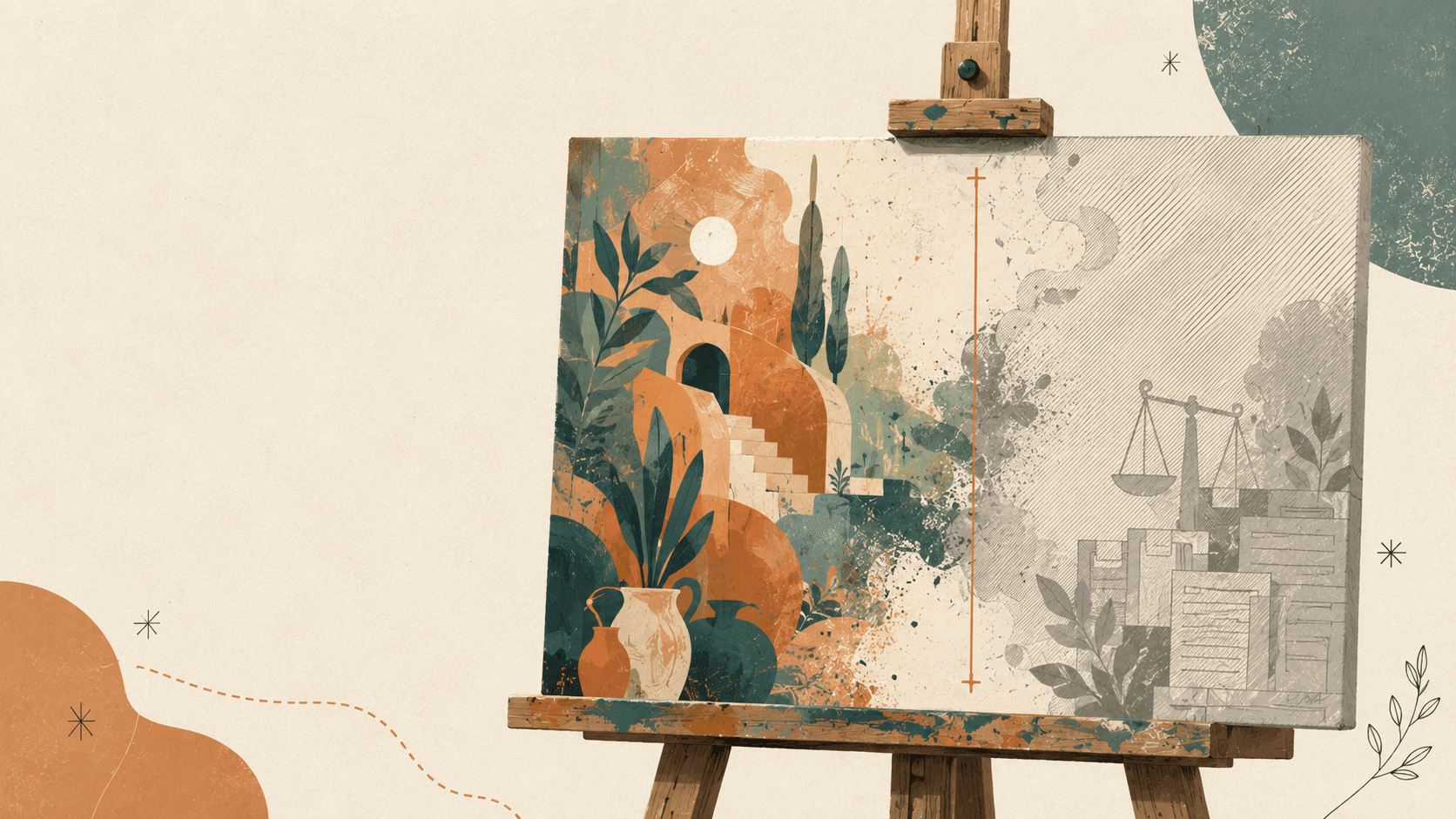
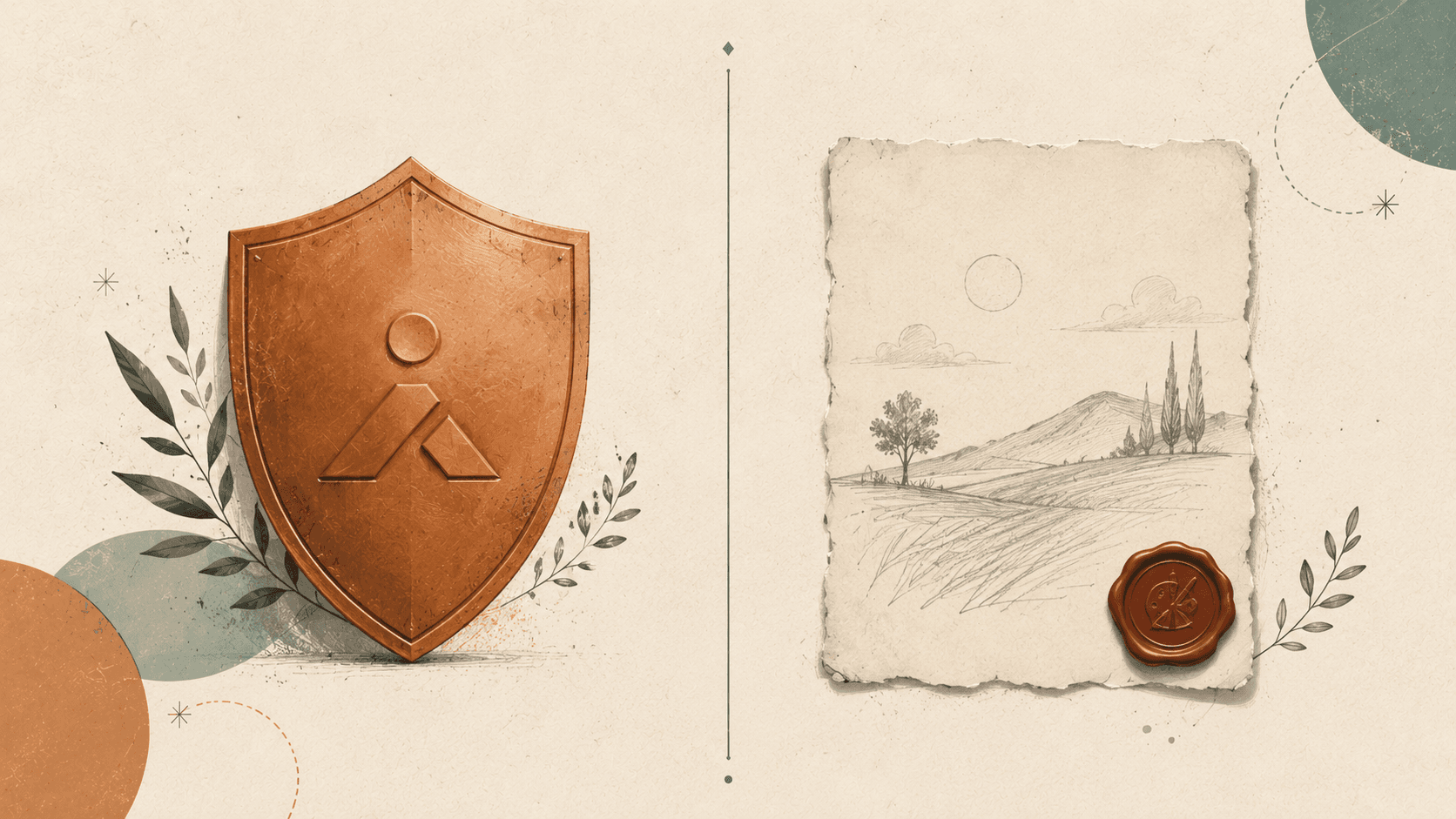
Copyright and trademark sit in different parts of the U.S. Code, were written for different reasons, and protect different things.
Copyright lives in Title 17 of the U.S. Code. Its purpose, written into the Constitution, is "to promote the progress of science and useful arts" by giving creators a temporary monopoly on their original works. Copyright is about authorship. It rewards the person who actually made a creative thing.
Trademark lives in Title 15, Chapter 22 — the Lanham Act, passed in 1946. Its purpose is consumer protection. Trademark law exists so that when a shopper sees "Nike" on a shoe, they can trust that Nike actually made (or licensed) the shoe. Trademark is about source identification. It rewards the brand that built consumer recognition.
Once you internalize that — copyright protects creators, trademark protects shoppers — almost every other difference flows from it.
What Copyright Protects #
Copyright protects "original works of authorship fixed in any tangible medium of expression." Plain English: if you made it, and it's recorded somewhere (saved on a drive, drawn on paper, printed on a shirt), copyright kicks in automatically the moment you create it. No filing required.
The work has to be:
- Original. Not copied from someone else, and at least minimally creative.
- Fixed. Saved in some physical or digital form. An idea in your head is not copyrightable; the same idea drawn in Procreate is.
Examples of works copyright protects:
- Illustrations, graphics, t-shirt designs, sticker art, mug prints
- Photographs (including product photos and lifestyle shots)
- Written text — listing descriptions, blog posts, books
- Music, sound recordings
- Movies and video
- Sculpture, paintings, jewelry designs (the artistic elements)
- Software code
What copyright does not protect:
- Names, titles, slogans, or short phrases. "Just Do It" cannot be copyrighted (but it is trademarked).
- Ideas, concepts, or general styles. The idea of a cat-with-sunglasses t-shirt is free. Your specific drawing of that cat is yours.
- Facts and data. A list of all 50 state capitals is not copyrightable.
- Functional objects. The shape of a useful object isn't copyrightable; only its separable artistic elements are.
Per the U.S. Copyright Office, copyright lasts the life of the author plus 70 years for natural authors. For "works made for hire" (created by employees for a company), anonymous works, and pseudonymous works, it lasts 95 years from publication or 120 years from creation, whichever ends first (17 U.S.C. § 302).
Registration is voluntary — but you can't sue for infringement of a U.S. work until you register, and you can only get statutory damages and attorney fees if you registered before the infringement started (or within three months of first publication).
What Trademark Protects #
Trademark protects the symbols a brand uses to identify itself in the marketplace. The point is to prevent consumer confusion about who made the product.
Trademark-eligible things include:
- Brand names. Nike, Disney, Pokemon, Coca-Cola, Hydroflask
- Logos. The Nike swoosh, the Apple silhouette, the Starbucks siren
- Slogans and taglines. "Just Do It," "Got Milk?", "I'm Lovin' It"
- Product names. "iPhone," "PlayStation," "Roomba"
- Trade dress. Distinctive packaging or product appearance — the shape of a Coca-Cola bottle, the layout of a Tiffany blue box
- Sounds, colors, even smells in narrow cases (the NBC chimes, UPS brown, Hasbro Play-Doh scent)
To get federal trademark protection under 15 U.S.C. § 1051, the mark generally has to be used in commerce (or filed with a bona fide intent to use, then put into use within the statutory window). Registration with the USPTO isn't strictly required to have some trademark rights — common-law rights exist from actual use — but federal registration unlocks nationwide rights, the right to use the ® symbol, statutory presumptions in court, and access to platform IP programs like Amazon Brand Registry.
Per USPTO rules, a registered trademark must be maintained with a Section 8 declaration of continued use between years 5 and 6, and then renewed every 10 years (combined Section 8 and 9 filing). As long as you keep using the mark and renewing, trademark protection is effectively perpetual. Coca-Cola has held its trademark since 1893. Levi's pocket-stitch design dates to 1873.
The Quick Comparison #
| Dimension | Copyright | Trademark |
|---|---|---|
| Statute | 17 U.S.C. (Title 17 — Copyright Act of 1976) | 15 U.S.C. §§ 1051 et seq. (Lanham Act of 1946) |
| What it protects | Original creative works (designs, photos, text, music, code) | Brand identifiers (names, logos, slogans, trade dress) |
| How you get it | Automatic on creation. Registration optional but needed to sue. | Use in commerce (common-law) + USPTO registration for full federal rights. |
| Duration | Life + 70 years (natural authors); 95 years from publication or 120 from creation for works for hire/anonymous | Indefinite, as long as you keep using it and file Section 8/9 renewals every 10 years |
| Symbol | © (optional but useful) | ™ (unregistered) / ® (federally registered) |
| Takedown procedure | DMCA notice + counter-notice (statutory under 17 U.S.C. § 512) | Platform-specific (Amazon Brand Registry, Etsy IP appeal) — no statutory counter-notice |
| Restoration window | 10–14 business days after valid counter-notice unless complainant sues | None automatic. Stays down until dispute is resolved. |
| Statutory damages | $750–$30,000 per work; up to $150,000 if willful (17 U.S.C. § 504(c)) | None per se; actual damages + up to 3x; attorney fees in exceptional cases (15 U.S.C. § 1117) |
| Main defense | Fair use, independent creation, license | No likelihood of confusion, fair use (descriptive/nominative), abandonment |
The Takedown Procedures Are Radically Different #
This is where most POD sellers get hurt. The procedures look superficially similar from a platform UI perspective — "report infringement" buttons, takedown forms — but the legal machinery behind them is entirely different.
Copyright takedowns: the DMCA #
The Digital Millennium Copyright Act, codified at 17 U.S.C. § 512, gives online platforms a "safe harbor" from liability if they follow a specific notice-and-takedown procedure for copyright claims. The flow:
- The rights holder sends a DMCA notice identifying the infringing material.
- The platform removes the listing (usually within hours).
- The accused seller may file a counter-notice stating, under penalty of perjury, that the takedown was wrong or based on misidentification.
- If a counter-notice is valid, the platform must restore the listing after no less than 10 and no more than 14 business days — unless the complainant files a lawsuit in that window.
This is a genuine federal-law procedure. Etsy, Amazon, Shopify, Redbubble, and every other major U.S.-based platform follows it because their entire safe-harbor immunity depends on it. The 10–14 day restoration clock is statutory; weekends and federal holidays don't count.
Trademark takedowns: nothing like the DMCA #
There is no DMCA for trademark. Congress never wrote one. Trademark takedowns happen entirely under private platform contracts, not federal law.
That means:
- No statutory counter-notice. If Amazon's Brand Registry removes your listing for trademark infringement, there is no federal procedure forcing Amazon to restore it after 10 days.
- No automatic restoration clock. The listing stays down until either the platform's internal appeal process clears you, or the brand owner withdraws the complaint, or the underlying dispute settles.
- Each platform sets its own rules. Amazon's process differs from Etsy's, which differs from Redbubble's. Evidence requirements, response times, and escalation paths vary.
- Filing a "DMCA counter-notice" for a trademark takedown is a trap. It doesn't apply, and filing knowingly false statements in a DMCA document exposes you to liability under 17 U.S.C. § 512(f) for misrepresentation.
If you remember nothing else from this article, remember this: a trademark takedown does not have a 10-day clock. The DMCA shortcut you may have used before does not work here.
Why POD Sellers Usually Trip Both Wires at Once #
The classic POD dispute isn't "copyright OR trademark." It's both.
Consider a single example: an unlicensed t-shirt showing a cartoon Mickey Mouse with the word "Mickey" printed under him.
- Copyright violation on the drawing itself. Disney owns copyright on every modern depiction of Mickey Mouse. The illustration is a derivative work of Disney's protected character.
- Trademark violation on the name. "Mickey Mouse" is a registered trademark used to identify Disney as the source of merchandise. Slapping it on a shirt suggests Disney made or endorsed it.
Two laws, two violations, two separate sets of remedies, two different takedown mechanisms. Disney can (and does) enforce both. That's why their legal letters routinely cite both 17 U.S.C. (copyright) and 15 U.S.C. (Lanham Act). A POD seller who only "fixes" one of the two — say, redrawing the character without the name — may still be infringing on the other.
The pattern shows up everywhere:
- NFL team logo on a hoodie = trademark on the logo + likely copyright on the artistic version of it
- Disney villain on a tote = copyright on the character + trademark on the name + possibly trademark on the costume design as trade dress
- "Nike" written in the Nike font on a sticker = trademark on the word "Nike," trademark on the swoosh if used, and copyright on Nike's stylized logo artwork
- A Pokémon stuck on a mug = copyright on the artwork + trademark on the name + trademark on the "Pokémon" brand
Different brands lean differently. Nike historically pushes trademark harder than copyright because its core IP is brand identity. Disney pushes both equally — they're famous for vigorous copyright AND trademark enforcement. Nintendo enforces both aggressively, and has a long history of going after fan content even in cases where many lawyers think the rights are debatable. Knowing which lever a particular brand pulls helps predict how the dispute will unfold.
The Penalty Math: Statutory Damages vs Treble Damages #
Both laws have teeth, but they bite differently.
Copyright remedies #
Under 17 U.S.C. § 504, a copyright owner can elect between:
- Actual damages plus infringer's profits attributable to the infringement, OR
- Statutory damages in a range the court sets — between $750 and $30,000 per infringed work, raised up to $150,000 per work if the infringement was willful, or reduced to as low as $200 per work for "innocent" infringement.
"Per work" is the dangerous part. A POD seller who copied 5 illustrations from one artist faces statutory damage exposure of 5 × the range. The math gets ugly fast.
Statutory damages are only available if the work was registered with the U.S. Copyright Office before infringement began (or within three months of first publication). Many indie artists don't register, which limits what they can recover — but the big rights holders (Disney, major labels, stock photo agencies) register everything.
Trademark remedies #
Under 15 U.S.C. § 1117, a trademark owner can recover:
- The infringer's profits on the infringing goods
- Actual damages the trademark owner suffered
- Costs of the action
- Up to three times the actual damages "according to the circumstances of the case"
- Reasonable attorney fees in "exceptional cases" (usually meaning willful or bad-faith infringement)
For counterfeit marks — knock-offs of registered marks made to look identical — treble damages are mandatory unless the court finds extenuating circumstances, plus attorney fees are baked in.
Trademark doesn't have headline-grabbing "per work" statutory damages the way copyright does, but the profits-disgorgement remedy is powerful: a court can order the seller to hand over all profits from infringing sales, and the seller has the burden to prove which sales weren't infringing. In a POD context, that often means handing over everything.
Which is more dangerous in dollar terms? #
It depends. For high-volume sellers with significant revenue, trademark profit-disgorgement can be bigger than statutory copyright damages. For low-volume sellers who happened to copy many separate registered works, copyright statutory damages can dwarf trademark damages. Counterfeiting cases are uniquely harsh — mandatory treble + attorney fees + sometimes criminal exposure under 18 U.S.C. § 2320.
Practical Decision Matrix: Which Law Applies to Your Situation #
Use this as a quick triage when you face a takedown, a C&D, or a question about whether a design is risky:
- Did you copy or closely imitate someone else's drawing, photo, text, or music? Copyright is in play. Ask whether your use is fair, transformative, licensed, or independently created.
- Did you put a brand's name, logo, or slogan on your product? Trademark is in play. Ask whether your use creates likelihood of consumer confusion about the source.
- Did you do both? Both laws apply. Resolve each separately.
- Did your listing get removed and the notice mentions "DMCA"? That's a copyright takedown. You have counter-notice rights and a 10–14 business day restoration clock if your counter-notice is valid.
- Did your listing get removed without "DMCA" in the notice — usually citing Brand Registry, IP report, or trademark? That's a trademark takedown. No counter-notice; use the platform's appeal process.
- Did the C&D letter cite 17 U.S.C.? Copyright claim.
- Did the C&D cite 15 U.S.C. or "Lanham Act"? Trademark claim.
- Did it cite both? Both claims. Treat them separately when deciding response options.
For the first-72-hours playbook on what to actually do once you get a letter, see our cease and desist playbook.
Frequently Asked Questions #
Do I need to register my own work? #
For copyright, no — protection is automatic the moment you create and fix the work. But to actually sue for infringement of a U.S. work, you must register with the U.S. Copyright Office first. And to get statutory damages and attorney fees, you must register before infringement begins (or within three months of first publication). Registration costs $45–$65 per work and is worth it for anything commercially important.
For trademark, registration isn't strictly required — common-law rights exist from actual use — but federal USPTO registration gives nationwide rights, the right to use ®, statutory presumptions in court, and access to platform IP enforcement programs. If your brand has any real value, register it.
Can the same thing be both copyrighted and trademarked? #
Yes, and it's common. The Nike swoosh is a trademark (identifies Nike as the source) AND a copyrighted artwork (an original creative design). The Mickey Mouse character is trademarked (a brand identifier for Disney) AND copyrighted (an original drawing). A single logo can sit under both laws simultaneously, and each law gives the owner a separate enforcement track.
Why does DMCA work for some takedowns but not others? #
Because the DMCA is a copyright statute. Congress wrote it in 1998 to deal specifically with copyright enforcement online. It has no trademark equivalent — there's no "Digital Millennium Trademark Act." Trademark takedowns happen under private platform terms of service, so there's no federal statutory restoration procedure. The same brand can use DMCA for the copyright half of its claim and a platform IP report for the trademark half — and only the DMCA half has counter-notice rights.
Which is more dangerous — a copyright claim or a trademark claim? #
Neither is universally worse, but they're dangerous in different ways. Copyright has predictable statutory damages — $750–$150,000 per registered work — that scale fast if you copied multiple works. Trademark has profit-disgorgement plus up to treble damages plus attorney fees, which scales with your sales volume. Counterfeiting (trademark) carries mandatory treble damages and possible criminal liability. As a rule of thumb: trademark claims are more often platform-fatal (account suspension); copyright claims more often produce headline-grabbing damage awards in court.
If a copyright expires, can I use the work freely? #
Maybe — but watch the trademark trap. When copyright on a work expires, the work enters the public domain and the underlying creative content becomes free to copy. But if the original characters or imagery also function as trademarks, those don't expire as long as the owner keeps using them in commerce. The classic case: Disney's 1928 "Steamboat Willie" entered the public domain on January 1, 2024. The 1928 Mickey illustration is free to copy as artwork. But "Mickey Mouse" the brand is still a live Disney trademark — so you can't use the freed character in ways that suggest Disney made or endorsed your product. See our deeper coverage: The Steamboat Willie public domain trap.
Do international sellers need to worry about U.S. copyright and trademark? #
Yes, if you sell to U.S. customers or list on U.S. marketplaces. U.S. courts have asserted jurisdiction over foreign sellers whose products reach U.S. consumers through Amazon, Etsy, or similar platforms. The platforms themselves enforce U.S. IP law regardless of where the seller is based — Amazon will remove a listing from a German seller for infringing a U.S. trademark, and Etsy will pull a listing from an Indonesian shop for U.S. copyright violations. International treaties (Berne Convention for copyright, Paris Convention and Madrid Protocol for trademark) further extend reach across borders.
How do I check if something is trademarked before I list it? #
Search the USPTO Trademark Electronic Search System for U.S. marks. Look at the goods/services classes, the status (live vs dead), and the registration date. Be aware that common-law rights also exist for unregistered marks in actual use — so a clean USPTO search isn't a full clearance. For visual marks and logos, the search-by-image part of clearance is what most sellers skip; that's exactly what LogoVerify is built for. For step-by-step clearance, see How to check if a logo is trademarked and How to check if a design is trademarked.
Related reading #
- Is Fan Art Legal to Sell on Etsy? — when copyright and trademark collide in fan markets
- The Steamboat Willie Public Domain Trap — copyright expired, trademark didn't
- Got a Cease & Desist Letter for Your Logo? A POD Seller's Playbook — the first 72 hours after a letter
- What Happens When You Get a Trademark Takedown on Amazon or Etsy — platform enforcement, deep dive
- How to Check If Your Logo Is Already Trademarked — pre-launch clearance
- How to Check If a Design Is Trademarked — visual clearance for POD
External resources #
- U.S. Copyright Office — official copyright registration and policy
- USPTO Trademark Search — search U.S. federal trademark registrations
- 17 U.S.C. — Copyright Act (Cornell Legal Information Institute)
- 15 U.S.C. §§ 1051 et seq. — Lanham Act (Cornell Legal Information Institute)
- U.S. Copyright Office: DMCA Section 512 resources — safe harbor and counter-notice procedures
- USPTO: Trademark maintenance and renewal — Sections 8 and 9 filings
Disclaimer: This article provides general information and is not legal advice. Copyright and trademark disputes are highly fact-specific, and the right answer for your situation depends on details this overview cannot cover. If you've received a takedown notice, cease and desist letter, or lawsuit, consult a qualified intellectual property attorney before responding.